Interview: David Javelosa
David Javelosa speaks with Alexander Rojas in this email interview for Sega Retro.
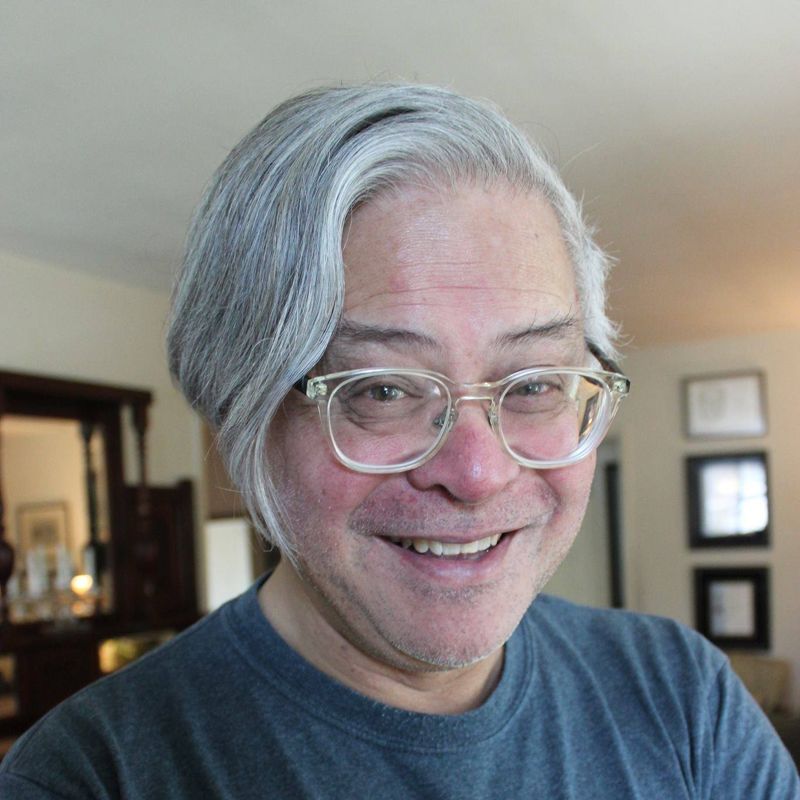
Introduction
This Sega Retro interview with David Javelosa was conducted by Alexander Rojas via email.
Conversation
Hey, this is Alex. Thanks so much for taking my call today!
No problem. How are you doing? Are you in Orange County?
You know what, I grew up in Orange County. I'm actually in Vegas right now.
You're in Vegas?
Yeah.
Oh cool, okay. I recognized the area code.
714, yeah. I've had that number for like 20 years.
Okay, cool. Everyone's everywhere now.
Yeah, really. It's interesting being out in Vegas, but there's not a whole lot going on out here. It is just a nice place to get your affairs in order, I guess.
At least until it gets hot.
Exactly, yeah. It's just starting to get to that point here. Regularly it'll hit like 110 plus. It's pretty rough, but you get used to it.
I'll have to get there to see. I'm still a little horsey in the throat.
I can hear that. I'm sorry to hear that.
Well, you know, my new wave band stuff has been gaining popularity again with the release of vinyls. We've been doing some shows for it.
I saw the new "[Whats That Got To Do With] Loving You" release.
Yeah. We're doing a couple of shows here and there. We did a couple of shows in the Bay Area earlier this year, a couple of shows down here. Then we're going to do a couple of shows in New York. Takes a lot out of you. That's what I'm recuperating from. [laughs]
No, I can imagine. Your voice is a tool. It probably gets a little rough after a while.
Yeah.
So I wanted to just quickly start off by saying thank you. The initial… I wouldn't really call them interviews… The questions that I sent off to you nearly almost two years ago. That really helped kickstart me getting these [current] interviews done. That came at a bad time in my life, and it turned a lot of things around. Thank you, so much.
Sure. Excellent, glad to hear it.
Now, given that you were my first interview, it was a little rough. Part of what I wanted to do here was to readdress some of the questions that I didn't answer or that I'd maybe like to see expanded on. Plus, I didn't really touch on your personal music career. It was just Sega stuff.
Right.
I actually did have some questions about a lot of your independent music stuff. To get started here, in your own words… I mean, you touched on it a little bit. Could you describe your background in music and the arts before San Jose State and Los Microwaves?
Before? I was just a suburban kid growing up in San Jose. I started taking piano lessons in fourth grade. I've always had a musical interest. Around high school time, I was doing some high school theater, but I also started to really get into pop music. I had to relearn the piano from my classical chops into one of like pop jazz chops.
What were you listening to, pop music-wise, that inspired you?
At that point, it was like, well, let's see. The year… when I started high school, it was like 1968. The San Francisco psychedelic scene was a big influence. A lot of the hard rock bands that were happening at the time: The Doors, Jefferson Airplane, Chicago. Those were the big bands. Basically, bands with keyboards in them. Also Santana.
Right. Something to relate to personally [keyboards].
Yeah. Then a little later on in high school, I started listening to a lot of British bands, from more of the prog rock style, which were using lots of keyboards, like Yes and Emerson Lake and Palmer and King Crimson. Because for me, that was so much more exciting, to have like an orchestra with like three or four people.
Right. Yeah. I've seen that in your work. I've heard that in your work, I should say.
Really? You got a good ear then! [laughs] So what I wanted to do with Microwaves… The new wave thing was basically a whole attempt at stripping down all the excess of like prog rock and disco and everything that came before. Los Microwaves was definitively a new wave combo. We were along the lines of B-52s meets Kraftwerk.
I'd say both of those descriptions are really good. You describing new wave. I've never heard anyone put it like that. That's great.
Whether we were new wave or not, that's how I looked at what we did.
[in agreement] No, I think that's very apt.
Yeah. We definitely got categorized into new wave. We worked that, we played clubs nationally. We had a couple of records out with an LA label and we picked up an agent at New York. It was a very successful touring band for about the three to five years of its life.
So on the founding of Los Microwaves, that was December 1978, a couple years after you graduated San Jose State, right?
Yeah, that was right. My graduation from San Jose State was actually remote. I did it as an independent study in New York, writing music for a dance company. I did get my degree from San Jose, but the work was done in New York.
Oh, okay. Interesting. Was that where you were performing as well in New York? Was that where Los Microwaves was at the time?
Yeah. I moved to New York in early '76 to basically complete my undergraduate. I was playing with people, I was writing for dance. The whole idea was to eventually start doing some sort of performance situation. By the time '78 happened, not only were the clubs filled with all sorts of interesting performance acts and new bands, but the formula that hit me was… I need to be recording and I need to be releasing. Even though I didn't have a formal label or publisher, I was just going to release my own stuff. That's where Hyperspace got started as an independent record label.
Right. Actually, that was going to be one of my next questions, if you could tell us about Hyperspace and just… what it was like to publish and run a label back then.
Well, it was basically… the label and the band were like hand in hand. I wanted to be in a band. I wanted the band to be successful and to get be successful [enough] to get into certain clubs. They really needed either a good demo or a release single. Everyone was releasing singles at the time. I said, "Okay, I'm going to release a single and I'm going to do it on my own label." That's what Hyperspace initially became. Hyperspace, really, released the first two Los Microwaves singles. Then it didn't really come back around because, at that point, we ended up signing with Posh Boy Records, which I did a pop EP with. Then I did the Baby Buddha first album with, and then finally the Los Microwaves album. Then, you know, we were all touring, and we released, I think, two or three singles from that album with Posh Boy. That's the LA label.
Then it wasn't until I left the band in New York and moved back to San Francisco that I re-hooked up with Baby Buddha. That's when I went back to the studio to produce the second Baby Buddha album, which was the first LP on Hyperspace.
Oh, okay! I was actually going to see if we could transition into Baby Buddha.
That didn't happen until around '86, '87. I think we produced the album in '86 and it was released in '87. At the time I made a transition from San Francisco to LA.
Oh, okay yeah. Because I wanted to ask when that was. What was the driving force behind Baby Buddha coming together?
Well, it's funny because, again, Baby Buddha and Los Microwaves were very hand in hand. Originally I was playing with my buddy Charles Hornaday in San Francisco. We were just doing jamming and recording and he was a monster musician. He had been playing commercially since he was a kid and he had all the chops. He had everything, all the prog rock stuff memorized. I really wanted to do like this cool electronic Kraftwerk-y new wave thing.
Between the two of us, we were totally into this new groove. About that time, I thought, it's time to maybe do a band and do some recruiting… He ended up getting a full time gig in a cover band in Hollywood at the Holiday Inn, the big rotating restaurant in Hollywood. He took off for a year. At that point I thought, "Okay, well, you're going to be gone. What I'll do is I'll start a rhythm section. Then when you come back, we'll basically do this band."
That rhythm section, which was the bass player, Meg Brazill. She was an actress who had an amazing stage presence and a great front voice. She learned bass really efficiently. Then we had our drummer, Todd. By the time Charles came back from Hollywood, the three piece of Los Microwaves was already getting gigs. We had our own trajectory.
We basically came up with the idea of just doing a second band called Baby Buddha, which would be me and Charles and anyone we could get into the studio or onto stage with us. Because we would do these late night, wacky improvisation gigs. That's what we did. Baby Buddha was a much more looser band and Los Microwaves was more of a performance recording act. To tell you the truth, I think Baby Buddha must have sold more records.
Really?
Yeah, because we did a couple of cover songs in our own certain way. We did a cover of Stand By Your Man and a cover of Your Cheating Heart and a couple of other originals that actually got a lot of airplay… college airplay. It was never mainstream. When we were touring, we would basically play the college towns. We would do interviews on the college radio. We'd stock the local record stores with records and then we'd play the local club and then move on to the next town.
Hah. That sounds like a very fun life. I appreciate the little insight into that. Because so much of music today is like… relying on your label to ship out millions of copies or whatever.
Oh yeah.
It's very fun imagining you just going to record stores-
Yeah. The whole do-it-yourself movement started back in the '80s. That's still there now, especially the corporate music is really just a shell of what it once was.
Right. Speaking of your other music, there's also David Microwave, which I believe is your solo work, correct?
Yeah, that was actually the first thing that Posh Boy released. He [Robbie Fields] wanted to do Los Microwaves, but Los Microwaves was holding out for a more appropriate release. I said, "I can go into the studio and do a solo record for you." So David Microwave, which was Robbie Fields' invention, basically released a 12" five song EP. It was like the pop side of Los Microwaves. The one track… actually got put on the Rodney on the ROQ compilation, which… KROQ was the big teenybopper radio station in L.A. Rodney Bingenheimer was the number one new wave DJ.
When Posh Boy put out Rodney on the ROQ Vol. 1, and it went to like three or four different volumes, one of the David Microwave tracks was on that particular album. I got a lot of mileage out of that particular one. The David Microwave release was originally an EP, which was like a 12" 45.
Then again, in New York, after Los Microwaves had split up but I hadn't quite left New York, I started working with another guitarist, Knox Chandler, who I've just been recently in touch with. He's been a big new wave guitarist, replacing a lot of members in everything from Siouxsie and the Banshees to Psychedelic Furs, Cyndi Lauper… He's been a guitarist for a lot of different new wave acts.
He and I went into the studio, and we basically did another five songs. I think this was in '83. When it came down to re-releasing the David Microwave thing from 1980, I put it together with the '83 Sessions, and that's what the 80-83 album is. The David Microwave 80-83 album are the original Posh Boy LA Sessions and then the New York Sessions with Knox Chandler.
Something I wanted to ask on that note, where does the name Microwave actually come from?
Oh, that's funny. It was just something I was toying around with my roommates when I was at San Jose State, just because microwave became the new cutting edge technology. You had microwave ovens and you had microwave communications… One of my roommates was goofing on how the girls back in those days had these curly bangs - like the Farrah Fawcett bangs. He used to call them microwave hairdos.
[laughs]
So the name Microwave just stuck. Originally, I did a performance ensemble called Microwave. Because we were in San Jose [a city with a Hispanic name], I thought it would be funny to call it Los Microwaves.
Yeah. [laughs] Oh! I didn't know where that lean came from.
Yeah. Then later we find out that, in the technology department, [in] microwave communication, there's an expression called line of sight microwaves, so LOS microwaves. It became yet another entendre with the name.
Oh, that's good.
So when engineers read Los Microwaves, they're reading line of sight microwave communication.
"No, do you mean the hardware or the band?"
Yeah, exactly.
So you have quite a lot of acts, or I should say, quite a lot of channels through which you've released music. There's Mothers of Mayhem, Krispy Kat, 31st Century Loud Music… There's a couple others I'm missing here. Just to touch on Mothers of Mayhem, what was the impetus behind forming that group?
Oh, Mothers of Mayhem was a quick fix. Los Microwaves had a final reunion tour in 2016. We had a couple of dates after the bass player [Meg Brazill] went back to Vermont, because she was living in Vermont raising her kid. She did the tour with us, but we still had a couple more promoters and events that booked us that wanted the music. I said, well… [with] Los Microwaves, the tour is done because Meg is back in New York. If you want a band with the same flavor… Basically, Mothers of Mayhem was essentially the Los Microwaves tour of 2016 without Meg Brazill.
My wife Evelyn, who goes by Scarlet Microwave, was basically the mother of Mothers of Mayhem. [laughs] Actually, her and Caroline Galanty, who was the original percussionist, who was fortuitously living in our neighborhood. Mothers of Mayhem basically became the leftover dates for the Los Microwaves tour.
Where the name [came from], we had this group of us on the Westside of L.A. that ride mopeds. So that was actually the name of our moped group. The Mothers of Mayhem. We have three-piece patch leather pests and the whole deal.
Oh, that's really funny. What a connection.
Yeah. It was a riff on the Sons of Anarchy.
Okay, that makes a lot more sense.
But since we had two mothers in the group, we called it Mothers of Mayhem. Not to be confused, of course, with the Mothers of Invention.
No, right. Of course.
You know the original name for that band? It's Motherfuckers. Because everyone in Zappa's band were like just amazing monster musicians. They were the band The Motherfuckers until the label said, "You've got to change the name."
Yeah, of course.
This is like mid '60s, really early on.
Yeah, that's a little brazen for the time. I think now you could probably get that done. Could you tell us about the production of Everyone Is My Age?
Everyone Is My Age… So that's the second Baby Buddha album. The second Baby Buddha album came about after… Baby Buddha, again, was very ephemeral. It was basically me and Charles and whoever we could get in the studio to work with us and on stage would work with us. So the second Baby Buddha album came about based around a handful of live recordings that we had done. With the core band of me, Charles and a drummer, Kat Zumbach.
Then we had people like… we had Margo Oliveira, the original bass player from the Go-Go's, and Meg Brazill from Los Microwaves, and Todd Lyon from 8TTB [Eight to the Bar] in New York, and Kathy Peck from The Contractions. We had a lot of side people just jamming with us in the studio without an idea that it was going to become the second Baby Buddha album. Until I realized the clearest way forward is to edit all of this together and call it Baby Buddha, because Baby Buddha was always so undefinable.
By the end of '86, we basically had all these sessions edited together and into one album that seemed to work as an album, and then I said… okay, Posh Boy had passed on it. As I moved to L.A., I basically restarted Hyperspace with the first LP and pressed it in Santa Monica. The name, the original title of the album, was The Big Generation because we were all baby boomers and we figured, yeah, we're the big generation. Everybody's the same age because we're the big generation.
At the same time, Yes had come out with an album called Big Generator. So we thought, "Okay, we don't want to get confused with that." Todd Lyon, our singer and artist on the East Coast said, "Well, why do you call it Big Generation?" I said, "Because everybody's my age." "So why don't you just call it Everybody's My Age?" [laughs]
Oh, that's good. It's awesome when you can stumble upon a title like that organically. It feels like it's more meaningful.
Yeah! It takes a team. People feed it back. For me, it was just an expression, [but] she goes, "That's the title." Then she basically designed the cover based on the concept of the title. I don't know if you have a copy of the actual 12" with the cover.
I don't have a physical copy, but I saw it online. That's partly… I think the cover is very striking.
Yeah, it's a very wild collage. There's a lot of detail in it.
So you said you were still making music now. In your own words, can you tell us what your musical output looks like right now?
My music output, that's funny. Since I restarted Hyperspace with the David Microwave album in… I guess that was 2017? So almost 30 years later. The first goal was to basically release material that I had been sitting on from just different bands and then my video game days and work and music and tracks that I still own the masters to. A lot of the stuff that I had been writing got released as 31st Century Lounge Music, Atomic Odyssey!, and to a certain point, the Cyber Steam Cabaret, which was some game-oriented material and other stuff that was considered more of my electronic virtual jazz stuff.
I guess my personal music is experimental electronic jazz. It has a little pop to it, some lyrics to it. That's where I ended up with Cyber Steam Cabaret. Then I picked it up again after I had already started performing as Microwave Buddha, which was basically a combination of Los Microwaves and Baby Buddha because I'm the only surviving member of both bands.
We lost Meg Brazill in '22. We lost the drummer from Los Microwaves in 2010. Charles retired in '23 or '24. We lost Pilar [Limosner] in '22 as well, '23? It's like, I figured I better jump on it because everyone's dropping like flies here. Microwave Buddha actually… the Microwave Buddha Companion and Other Delights is again another collection of sessions, but collaborations that I've done with people like Geza X, who's an LA producer, like Chip Kinman from the punk band The Dils and Rank & File… Bebe Barron, who was one of the original composers in The Forbidden Planet soundtrack. Orange Kandy, which is a Tokyo band. And a couple of other bands that are very obscure… Shipyard Choir. Then musicians that I've worked with in and outside of the game industry. Again, this was like a big editing project.
There might be a couple of original tunes on that album that I might still consider playing live. At this point, what we're doing live is essentially just a legacy set of Los Microwaves and Baby Buddha songs, and a couple of cover songs from other '80s bands that we used to play with, like Tuxedomoon.
Oh, interesting. You have so much musical history going on, I wish I would have written a second interview. There's so many questions I can ask you about here.
You can always get back to me! Especially when my voice gets better.
Right. Yeah. [laughs]
In mid 2023, you partnered with Section 9 on two releases of your Sega music. There was the Sega Channel and Sega CD. What was it like getting those done?
You know what? I got to tell you, that was a complete skunkworks, because somebody had told me that it happened [after the fact].
Wo- [stunned]
So I went online and checked it out, and sure enough there was a full album, Sega Channel, which I was very honored and flattered to see. Then there was a 45 with multiple mixes of Sega CD, with me and one of the guys from Japan.
I contacted these guys [Section 9] directly and I said, "You know, I've been restraining from releasing certain Sega stuff that I've worked on, because by contract, Sega owns all of this stuff. I'm not going to blow the whistle on you guys, because you're fans, and I know that you want this stuff to be out. It's not at a level enough to where… Sega's not really going to care anymore. But in the spirit of cooperation, if you could send me a couple handfuls for my archives, that would be great."
Did they?
[in confirmation] I basically distributed them out as Christmas presents to people that I used to work with at Sega.
I'm really surprised to hear that that was done unofficially. It would have been largely unofficial anyways, but I at least thought they reached out to you.
Yeah, they didn't reach out to me, and they definitely didn't reach out to Sega. There have been some projects that have Sega's blessings, and they went through the proper channels, and Sega probably took a chunk of money from them. Nobody's really making money with records. That's the thing. Records are used to promote bands like merchandise, basically. We may opt to release a vinyl at live shows or mail order, but other than that, they're more like promotional giveaways these days. Eventually down the road, they're going to become very collectible. The stuff that we have currently in circulation, they're going to be collectible, like the old stuff. Los Microwaves and Baby Buddha records are going for $50 to $120 a piece for the original pressing.
I've re-released Los Microwaves through Dark Entries Records, which is a known label, and Everyone's My Age through Dark Entries. Then I've re-released Music for Teenage Sex on Hyperspace, and then a second Los Microwaves album. These things aren't moving quite as fast as the original pressings from the '80s. As time goes on, they will become much more collectible, as will be the video game lounge soundtracks that I've been releasing.
Then the other thing that I've been branching out on is doing an ambient series on Hyperspace.
Oh, no way.
Yeah, we have four releases of ambient records called Next World Sound Volumes 1 through 4. I'm working on a fifth volume, actually, this week. [coughs]
Aw, I'm so sorry about your voice there.
Let me just let me get a spritz of cough spray here.
Absolutely. Take your time.
Yeah it's the most talking I've been doing since my voice came back.
[sympathetically] Right. You know what? I'll hop right to the second question, because I mostly focused the beginning here on your musical work. Or your non-Sega music work.
So the… what's the name of those guys? Section 9?
Section 9, yeah.
Yeah, they were very nice, very cordial. They sent me a nice package. Then I promoted them with my websites and social media. It's all a mutual online love fest. We're just doing it for the love of the music, really. Notoriety doesn't hurt, because I've actually sold some pieces of music in recent years to TV shows. That's a great thing. That's where all the money really is.
Right. Like licensing and residuals.
Exactly. I sold the song "I Can't Say" from the David Microwave album to a Will Ferrell TV show, No Activity. It's just one song, the last scene plays over the credits. They cut me a nice big check as an advance, and I'll have residuals when it goes to syndication.
Okay, I'll have to check that out.
You know, my agent definitely took his share. [laughs] Then on top of that, we released, just recently, a Los Microwaves double remix album, which has a 45 12 of dance mixes on one disc.
Then the second disc is a 12 33 of instrumental mixes for music supervisors. Hollywood seems to be really enamored with an '80s style of instrumental music. This is basically the first Los Microwaves album without any vocals on it.
Huh. Yeah, it seems like that sound is very much in nowadays. You guys always had a unique, or have a unique sounding palette, I guess.
Yeah, I'm hoping that it perks up a few ears.
One last question before I move on to the Sega stuff; it's related. You had mentioned briefly that your first introduction to games was between your gigs, at like bars and stuff, you would play the arcade machines. Was that your first introduction to games?
Pretty much. I remember being on tour. We'd be in bars, and then in the bars would be these coin-op machines. I'm sure some of them were Sega, but I wasn't even aware of anything [like that] back in those days. I just remember something like Defender or one of these spaceship games. It really caught my imagination. I found myself playing these games… Every club we went to, there'd be a whole other set of game machines in the club. The more we toured, the more sophisticated these games got. I remember actually seeing the evolution from 8-bit to 16-bit in the coin-op world. This would have been, what? 1980, '81?
Oh interesting.
The thing that I remember at that point was: somebody out there has a job making these things. I thought that would be a cool job to get into after I was done being, you know, a rock and roller.
[laughs] Back then, the arcade games didn't have… I think that was just at the point where they were starting to introduce music more commonly into games.
Yeah!
Do you even remember hearing much outside of sound effects?
Not really. I just remember it was all electronic sound. I did my undergraduate in electronic music, so it all resonated with me. I remember at one point living in New York and staying with some friends upstate. I think Los Microwaves was pretty much on hiatus by that point. [I'm] visiting some friends and they had a kid with a Nintendo… or no, an Atari. It was like an old Atari. I just glommed onto this thing because I remember Atari starting up in San Jose before I left. It was pretty fascinating.
You were hired to Sega of America's production team. I think it was… Product Development Team was the name, in 1989. Could you tell us about that?
Well, the transition from the club thing was… Leaving the band, doing Baby Buddha, moving to L.A. Once I got to L.A., I had decided I was going to go back to grad school. I started doing my master's in Composition at CalArts. In the meantime, one of my close compatriots in San Francisco, who was in the band called The Units and a couple of others like Tuxedomoon, said he had started getting freelance work in Silicon Valley, basically coding music. I'm going, "Coding music? What are you talking about?" At the time, I had recently picked up a Commodore 64 and I was starting to do very early MIDI with my Commodore 64 and making music for backtracks for doing live shows.
My friend, who's LX Rudis, and you could look up his credits for early Atari games…
The Lynx guy!
The Lynx guy. Exactly, the Lynx guy. He's like my son's godfather.
He's more than that, but the Lynx guy. [laughs]
He was the best man at my first wedding. Anyway, LX basically said, "Listen, I'm having an ulcer because I got too much work. You know how to program FM synthesizers and you know how to do command line MIDI editing. You got the skills to help me out with these jobs." So he basically stuck to the hardcore shit, which was Atari and Epyx and Lynx. He gave me this company that had just hit the ground in the Bay Area and that was Sega [of America]. I came up and did a couple of meetings with Ed Anunziata at the time, who was like looking to get somebody to work on a hockey game for him.
Mario Lemieux…?
That was Mario Lemieux, yeah. It was Mario Lemieux's Ice Hockey. Then an EA title called M-1 Abrams Battle Tank. I think 688 Attack Sub.
Yeah, Attack Sub. Those are the three, I think.
Yeah. Those are the military… Those were the EA licenses. Then I think Mario Lemieux was a separate license. Using these primitive tools, I whipped together some sounds for Ed coming out of the Genesis. The main reason they brought me in was to help make the tools work. Because they had the Japanese tools, which nobody had access to, and then they had a local contractor create some tools, which were pretty much unusable.
I think that was called the Sega Music Development System by a company called Artech.
Yeah. There was one tool before GEMS. Then around 1991, they started developing GEMS. GEMS then came into maturity. They had put together a killer team. They had the Miller Brothers… One was a programmer, one was a music director, Mark Miller and John Miller. Chris Grigg and Bert Sloan. Bert Sloan was another programmer and Bert and John were a programming team. Chris Grigg was one of the people that helped create the MIDI specification.
Oh! He was partly responsible for… because GEMS is a very MIDI focused system. Was he kind of responsible for that?
Right! The real thing was basically: amortize the power of MIDI, which was rapidly becoming an industry standard, and making it completely portable from MIDI to game development. To basically leverage industry standards to make it easier to make games. Personally, I feel like GEMS did so much for the Genesis and Sega in general… To have a successful platform, you have to have lots of content. To have successful content, you have to have the best tools. GEMS was a fast and dirty tool for putting music into the Genesis.
With all this music available, Sega was able to really crank out games, probably faster than it should have. There was probably more music than games to put them in. I remember our VP of development [Joe Miller], used to say, "You know, we got to slow down" and "We're doing too much shovelware." That's what he used to call it. Sega releases of shovelware. Like, yeah, we're just like generating garbage here.
Oh! Even Sega's producers and the team and the management themselves, even back in the day, they were saying, "Our games are shovelware, we need to watch it."
Yeah. When I joined Sega, I was a freelancer, I was still at CalArts, and I was flying up on the weekends to work at Sega. Even before I graduated, they flew me up full time. I started overlapping with my last year at CalArts, working full time at Sega of America in Redwood City. That was, I guess, late '91, early '92. From then on, I was full time straight on through to the Sega CD and the beginning developments of the Saturn.
Oh, right. To step back a little bit here, when you were hired to Sega in October 1989, what was your official company position? Like, what were you hired for?
In '89 I was a freelancer. I worked as a freelancer in '89. I worked on a couple titles in '90. I was starting to do meetings again in late '91, only to realize they were looking for someone to fill a position. At that point, Mark Miller was freelancing, but he was freelancing on site for the time. He also had controlling interests in the GEMS tool, which meant people were thinking it was a little bit of a conflict of interest. "He should either be on staff and Sega should own the tool, or he should be on freelance and license the tool."
He decided to go the freelance license thing. Mark and I felt like we had the revolving door position. He was there full time when I was freelancing. I came in full time and he went freelance. Then when I left in '94, he came back in full time. It was the same players, just a different year. I didn't get hired full time until December '91, or maybe it was January '92. I can't remember. It was the holiday.
That was exactly my next question.
That's when I was officially hired full time as an employee. Before that, it was all freelance contracts.
Right. Then… late '91, early '92… that was Sega Multimedia Studio at that time?
That's right. That's what they were hiring me to head as far as audio. They needed an audio head for the Multimedia Studio. At that point I had just been working for Voyager, the Voyager Company, which was a multimedia company in L.A. doing classical music CD-ROMs.
The CD-ROMs, yeah.
Yeah. So Ken Balthaser was enamored with the idea that I had already been working in CD-ROM.
Right. You had the experience. That was important for him.
Yeah. I knew how to edit MIDI. I knew how to produce for CD-ROM. I knew how to write music and produce in a studio. I was the first hire. My first job was to build my staff up. I brought in Spencer Nielsen, I brought in Brian Coburn, I brought in Barry Blum, and then I brought in Tom Miley as a programmer.
So you had walked into Multimedia Studio and it was practically empty. You were the one that populated it with the talent needed.
Well, the audio side, yeah. It was me on the audio side, Tom Reuterdahl on the programming side, Mimi Doggett on the art side. Let's see, did they have even designers at the time? Eventually they brought in Jerome Domurat from Apple for the design team and Adam Sevillia, who's a great designer, oh my god. Completely crazy guy. Then we always had freelancers hanging around too, but those were the core full-timers.
You had mentioned that when Multimedia Studio was established in late '91, early '92, that it absorbed the Product Development Team's audio department. Do you know what that was like?
Well… Product Development was like an overall umbrella. There was no official product development. There's [the] Product Development department, which we were all in, and it included all the producers that were doing outside titles… inside producers who were doing development with outside developers… and these were all first party titles.
Then we, the Multimedia team, were going to basically be the first internal development studio at Sega [of America]. It was specifically focused on the Sega CD system.
Right. So they were putting all their money into CD.
Yeah. I mean, Product Development was like a general umbrella. The Multimedia Studio was first and then it wasn't until later on that they dissolved the whole Multimedia thing and just called it all Product Development.
Oh, okay. Interesting.
The subdivision that it became was Developer…
Technical Support?
Yeah, there was Developer Technical Support and then Developer Creative Support.
Creative support, yeah, Creative Support.
The Multimedia team basically broke up into Creative Support and Developer Creative Support. We were the internal team supporting both our own development and external development. Nobody knew what they were doing at the time. We were all making it up at the same time. It sounds organized now in hindsight, but at the time nobody knew what they were doing.
I feel like that's part of the theme of Sega of America. Jumping into the pool too soon and then learning how to swim as you're in the water.
It was a lot of good intention, believe me.
[laughs] Specifically, do you remember the address that the studio was located at, or was that just Redwood Shores?
It was Redwood Shores. I remember a number like 920… something like that? Does that sound like a bell? If I went onto Google Maps right now, I could probably find it. Hang on, let me, let me just, yeah, let me zoom in and I can find the building.
Yeah, we have an address field that we can plug that into.
Oh, cool. Okay, let's see… Google Maps and Redwood…
Yeah, cause when I think recording studio, I thought of something like in the heart of downtown…
Spencer basically hived off at one point and created the Sega Music Group and he had a studio in downtown San Francisco.
Okay, that's what I'm thinking of. But there was still a separate recording facility inside Multimedia Studio?
There was, and actually Spencer started that one as well. He started that one and then he felt like he needed to branch off because all of a sudden he got the VP [Joe Miller] excited about releasing game music into the music industry and everyone got all starry-eyed and they ended up spending a lot of money, which didn't really pay off.
Is that where the Sega Tunes CDs came from?
Sounds familiar. Yeah, that sounds familiar.
There was a bunch of arrangements of first-party STI stuff. [The CDs] had some Spinball arrangements and stuff like that.
Right!
Vectorman stuff…
[looking at Google Maps] okay… I think I'm seeing… okay, let me go to Map View and see if I can… I mean, it haunts me every time I drive down the 101. So there's the exit…
Oh, you're still in the Bay Area?
Yeah, it was Shoreway Road. No, I go up to the Bay Area a lot. I think it's this building here… Yeah, it's 125 Shoreway Road.
Okay. Cool. Thank you so much for looking that up. I'll get that plugged in later.
Sure. That's where Product Development was and the Multimedia Studio was. Then Sega of America moved their headquarters around the corner to… which building? It was nearby… Shore Breeze Business Center, I think it was? That looks familiar.
Beside the water?
Yeah. It was… [looking at Google Maps] Gosh, oh, EA's over here now too. Oh, it was right behind where EA is now. Their campus was further north at the time, but they ended up moving right into the same area that Sega was. [looking at Google Maps] Oh yeah, that's all EA campus. That's crazy. The Shore Breeze Business Center was where Sega of America's corporate offices were. That's where Developer Technical Support was.
Oh, awesome. We did not know that.
Then Developer Creative Support was the 125 Shoreway building. Then I think that moved over to… [looking at Google Maps] I think we actually moved over to the Cormorant building [700 Saginaw]. What's the address here? Let's see if I can see it… I can't see an address…
No worries. I appreciate you looking that up though. Another thing I wanted to ask was… One of your duties at Sega was music and audio supervision.
Right!
Could you describe what that work entails when it comes to video games versus normal music supervision?
Well, it basically meant… cause everything was buyout music. We very rarely licensed music. If the studio couldn't do it, which… we rapidly ran out of bandwidth, we couldn't do all the requests coming from the external side of PD. I would basically identify qualified external freelancers, many of which were Mark Miller's people, cause they were all training under Mark, who had co-authored the GEMS system. I had actually sent a lot of academic colleagues to him, people like Wiley Evans and Steve Horowitz. Ironically I was teaching adjunct at San Francisco State because I needed a break from studio production.
I was teaching in their multimedia program at San Francisco State. Then comes this really goth looking musician dude. That was Kurt Larson from Information Society. I'm saying "What are you doing in my class?" and he goes "I want to learn how to write music for games." I say, "Dude, you're already in a game machine," because the CD+G package that came with the Sega CD system [Rock Paintings/Hot Hits] had a couple tracks from Information Society on it.
Oh! I did not know that.
It was a perfect fit. We became really good friends and I got him hooked up with Mark Miller to do freelance work. Then I consulted with him when he was at EA and he was at a number of different developers. He's still working with the industry and he still tours with Information Society from time to time. I know they have a really big following in South America. He's a Southern hemisphere rockstar. Even though he's like a "Where are they now?" type of musician in the States.
I'll see if I can bother him.
So Mark Miller became my main source for freelancers. Then, just between you and I (because it's all water under the bridge), Mark Miller was one of these NDA'd contractors for Tommy Tallarico's studios. Tommy Tallarico, of course, is the self-proclaimed biggest name in video game music. The reason why he did it was he used the Hans Zimmer studio model. Which is… you sign a whole bunch of really good contractors, but they're all under NDA to not say who they're working for.
Oh. Would you say that why… cause Tommy Tallarico as a brand, as a name, was known for having… not excellent music, but better music for Western titles at the time. Would you say that's partly the reason behind it? Contractors?
Because he hired the best contractors, yeah. Same with Hans Zimmer in the movies. I guess in more proper circles, it would be called ghost writing. But in the business of entertainment, it's just business. So you sign an NDA, it's an NDA. If the NDA includes anonymity or ownership, so be it. You're getting paid to do what you like to do. It's just, that's somebody's owning it, and somebody's taking credit for it.
Disney's like that too. I did work for a lot of Disney stuff, both as Sega stuff and other things. I did Pocahontas for Disney for the Sega Genesis. They say, "We own everything that you have been doing when you were working on our project for five years."
Oof.
I mean, it's monstrous.
What was working with Disney like?
It's huge. It's corporate. I've worked for them on multiple occasions. I worked for them as a tech support when I first came to L.A. I did tech support when I first came in and I did… what was the other thing? Computer support? Yeah. I did tech support on an administrative level helping all of these internal managers get their spreadsheets together. Then I worked with them as a tech support on the networking level, as they were trying to reconcile the fact that half the studio had Macs, half of them had PCs. I was already cross-platform from the beginning. Game development is a cross-platform discipline. Basically doing a lot of back and forth translation.
Then I came back, through an agent, to basically pick up the lagging audio work on Pocahontas that they were doing for the Genesis.
So that's why you were brought on specifically?
Yeah. They called it technical support because I didn't "make" the music. It was Pocahontas music.
You were translating.
Yeah. They even had a staff audio person that took the credit for the audio translation. Basically I did it. Because I knew how to do it. I had just got out of Sega. I still had all my GEMS editing gear and when the agent said, "Can you do Sega Genesis game audio?", I say, "That's all I've been doing for the past four years."
Right.
It was a successful project. It was very over the top. They just threw so many resources at it. I was doing conference calls with four different countries.
Oh wow. Cause you look at it, it doesn't seem like it was that big of a project. 30 years later, it's just another movie tie-in game on a shelf, but yeah, I guess it was Disney with a big movie.
Yeah. That was what I ended up doing, before and after I was full time at Sega, basically doing independent contracts. Mostly for cartridge.
Your other one… It was Pocahontas and Aaahh!!! Real Monsters, right?
Oh, right. It was… Klasky Csupo was the content owner. And Dave Warhol's company… What was the name of that developer? Whoever Aaahh!!! Real Monsters was developed by, that's who I did the job with. [Realtime Associates] That was another one that came to me by way of my agent at ICM.
You know, I'm curious. How does an agent go about hearing about something like that? Does the game development studio put out their feelers to like… the community of agents with like, "Well we need some music work done on this?"
This is another phenomenon. Cause when I first got to L.A. in… I'm going to say, was it '94? Hollywood was reeling from the fact that video games was making more money than movies. Agents were freaking out saying, "How do we get into the game industry?"
Right, CAA coming to Sega.
Everyone from CAA to ICM to all the big movie agencies; William Morris. They were scrambling for talent. I would get calls from people out of the blue. They were just on Rolodex hunts… they were searching and doing research, and working the connections to find out who actually did the work on the games and who's…
"Who's making this money?"
Yeah. "Who's making this money that we need to have some of?"
"Cause we ignored video games for the past like 20 years. Now it's finally time to start paying attention."
Exactly. Luckily there was a friend of a friend who was at ICM and she was lovely. I had met her before at parties and she says, "I really think we should work together. But you're going to be teaching me as much as I'm going to be finding work for you."
It was a learning curve for them and they may still be representing certain people. Like they were representing Hollywood writers as game designers. Then they were representing tried and true teams, like freelance development teams that had a producer / programmer or director. Like a small development shop, they were representing them to the big publishers. Then they were trying to work their percentages.
I think for some people it works, some people it didn't. I was put together with a couple of projects that never went anywhere. Disney was big because Disney is too big to fail. They're happy to pay what it takes to get it done.
Right. You had mentioned projects that never went anywhere. I'm sure a lot of those were, were non Sega projects, but, disregarding the SETI-Fiorella project, which I'm going to ask you about next…
Oh wow. [laughs]
Could you tell us about any non-SETI unreleased Sega games that you worked on?
Sega CD?
Just any Sega stuff.
Well one of my favorites was Baby Boom. It was an Ed Annunziata title.
Baby Boom!
I've seen some fan art for a release cover, but I don't think it ever got out there on anything.
You know, I think that that cover was real. That was their preliminary… that's what they were going to release it under.
It was a sizzle.
Yeah, I wanted to want to ask about that.
The funny thing is that I actually went… That was one of the first and only licenses I did for Sega. I actually went out to the Raymond Scott estate to license Powerhouse.
Yeah! What was speaking to Raymond Scott like?
Raymond Scott was pretty much incommunicado by that point. He was very old and was not able to speak. I had visited him at his home and had a nice afternoon with his wife, Mitzi, who… god it was crazy. She showed me his studio with all the cannibalized technology. Cause he, you know, he had created synthesizers and sequencers before its day. He was just basically this hulk of a person, in the corner mumbling.
Then Mitzi passed soon after that, but not before she sent me the schematics of his Electronium, which ended up in Mark Mothersbaugh's studio. The Electronium, which Mark Mothersbaugh from Devo ended up with a copy of. The other main copy of the machine was in Gordon Berry's studio at Motown Records.
Powerhouse was the cartoon song to end all cartoon songs. A lot of people attribute it to Carl Stalling, who's the music director at Warner, and he arranged all of that stuff. But the original tune was Raymond Scott Quintette. I went to the source, so I wouldn't have to deal with Warner Brothers. I did a full MIDI arrangement for the demo cartridge [DJ Demo Reel] of Powerhouse. For a game that never happened.
Baby Boom is sad. Everyone I interview, I ask them about Baby Boom, because I personally think the project would have been great. I like the gameplay concept…
Yeah, it was like baby's hotel with Lemmings.
Yeah. With like a crane game-y type aspect to it. Where all the stuff that you're trying to pick up is always moving.
The premise was: it's New Year's Eve, you're a babysitter, and you're on the first level of this condo, and every level gets harder. You start moving up the floors of the condo and the babies start getting more and more suicidal and it's a brilliant game.
[laughs]
That's Ed. I'm in touch with Ed Annunziata and we have plans to get together this summer.
They just announced a new Ecco game or a series of remasters or something. I think he's busy with that, but if you do get a chance to speak with them in the next couple of weeks, tell him that Alex would love to interview him. I've been trying to get in touch with him.
Yeah. In fact, we're talking about releasing the soundtrack for Mort the Chicken on Hyperspace as a vinyl.
Was Mort the Chicken Ed's game?
I don't think it was a… was that a Sega game or did it go to PS1? I think it was a PlayStation game actually.
When you were doing Baby Boom, did he [Annunziata] give you any [musical] direction as to… obviously you did Powerhouse, but there are some other tracks…
He liked Powerhouse. That's one thing he knew. Ed had a very interesting musical language. The success of every producer is being able to use whatever language they have to communicate to their creatives. Ed's musical language, are you ready for this, is the catalog of Pink Floyd. He knows every track on every album by Pink Floyd. He will reference that as a way of describing what he wants in his music.
When you worked with him, did you know Pink Floyd to the extent that he did?
Absolutely. We spoke the same language immediately. So he would just describe a track and I say, "I know exactly what you want, based on your knowledge of Pink Floyd. You want the ethereal stuff here. You want the driving stuff here. You want the bluesy stuff here." He is a great guy to work with. Him and LX Rudis, those are the two guys mostly responsible for me being in games.
Do you remember why Baby Boom was cancelled, specifically?
I have no idea. I was long gone.
Oh, okay. Gotcha. I know it was Ed producing, you were handling the music… Off the top of your head, do you remember anyone else?
Oh god, I don't know. I'm imagining either Mimi or Kristen were doing at least the spec art. I don't know whether it was being programmed internally or externally [externally]. Ed liked to work with a lot of external programmers cause he could hold them to their milestones better if they were external.
You were going to mention other unreleased Sega titles.
Oh yeah. Let's see. Cause Baby Boom is something that… there were a handful of things that I was working on, and then I left Sega in… I guess it was Fall '94. A lot of projects followed me. In a way, Sega Channel was an unreleased project.
Yeah. Not very well preserved.
It went through a number of different iterations. The final ones actually didn't even have my music on it. They were released in a couple of test markets, but obviously it never became a national phenomenon.
Do you remember how many tracks you did for Sega Channel?
It was a buttload. I mean it was like at least 10 to a dozen chapter tracks and then some intros.
Right. That was you and… did [John] Baker also work on that? Cause it sounds very Baker-esque.
He came in after I had left. I had done a round [of tracks] when I was still on staff. Then when I left, they came back to me and said, "Would you continue freelance working on this stuff?" I say, "Okay." Then from what I heard, John came in to do more. They needed a few, just a couple more titles [tracks]. So they brought John in to do a couple of things on it. I think he got the credit on one of the title tracks. But John was one of our shortlists as far as like… there was John Baker. There was Andy Armer, there was Mark Miller, they all work for Mark. There was… what's his name? Greg… was it Greg? I used to party with this guy so much…
No worries.
Mark had his own group of people. The freelancers were always interchangeable. Having John come in… I was more than happy to have him take over.
Right. To hop to that SETI-Fiorella project, can you tell us more about that?
Well, that's another interesting thing because, as you know, I had been working for Voyager just before that, before Sega. Voyager had just released a CD-ROM featuring Fiorella Terenzi. Cause she's this outspoken, model-esque astrophysicist. They call her the Madonna of astrophysics. She had done an informational CD-ROM with the Voyager Company. I had already met her and her manager at parties with Voyager. Then when we were at Sega, there was still a lot of these multimedia conferences and everybody, all the content people, were… you had a lot of celebrity contents like Fiorella Terenzi and The Amazing Kat [Katherine Thomas], who's like this classical guitarist, violinist. Just a lot of the same people going to the same conferences, the same parties.
I came back from… I think Macworld. I was with a couple of the Sega people that were with me, and they were saying, "This totally plays into Joe Miller's concept of doing a SETI game." Joe Miller, before he became VP of PD [Product Development] at Sega, he was a boy genius engineer at NASA. For him, SETI was real. He thought that if we could crowdsource every Sega Genesis out there, we would be able to decipher radio telescope information-
No WAY.
-and we would be able to identify the intelligence.
[laughs] Oh my god. I… cause I thought it was SETI-themed. Like it was about SETI. I didn't know it was actually- it was an attempt to make a networked SETI system using Genesises.
Yeah. Cause there were like, what? 7 million Genesises? And 7 million Genesises set up with a little individual dish, they'd be able to scan their footage of the sky and use the [Motorola] 68000 to process their share of the data. Ironically, a couple of years after that, there was a thing called… was it SETI For All? [SETI@home] It was a screensaver that went out.
Right, that's what I'm thinking of!
Yeah. The screensavers were… They weren't doing the scanning, but they were downloading the SETI data. When your PC went to sleep, it would basically take over the hardware and process SETI data in a crowdsource. It's hysterical.
That was a perfect storm. Fiorella Terenzi, her manager, Joe Miller, the Multimedia Studio - "Let's make a CD-ROM on SETI". I think that was as far as it got. Cause the Multimedia Studio was, again… nobody knew what they were doing. Everything was in chaos. We had so many projects and we had so many project concepts floating around and no methodology. The only way we were able to actually get [anything done]… I mean, Ed Annunziata quit Jurassic Park as producer. We were working without a producer. At one point, the director of the Studio [Tom Reuterdahl] was trying to be the producer and he was overwhelmed with his position.
At one point we all nominated Scott Bayless, who was one of the lead programmers, who was actually a decent producer from his previous gigs and he was actually able to deliver Jurassic Park. It was a basket case. Japan hated it, but it won game of the year.
[in reaction to hearing Sega of Japan's dislike of the game] Oh really?
Cause it was basically a PC point and click adventure on a 16-bit game console.
It also had development costs that weren't immediately visible. The whole hiring Dr. Bakker, all the stuff that went into that. But if you look at the end result of the final game, it's not really that visible… It is once you play it, but usually when you see like a celebrity endorsement or something…
They were trying to throw everything at this game. They were going to use the same [gameplay] model for the SETI game. Only have Fiorella as the spokesperson.
The Genesis… you would need some specialized hardware… You said maybe a dish or… You would at least need some online connection. Was that hardware taken into account?
Yes and no. That would have probably been the first feature to be cut. Hardware peripherals are extra money times your installed base and that's just not going to sell through.
On that project, obviously you were involved with the Fiorella project somehow. What would you say your role was, and then who else can you remember?
I was putting people together. That's seems like most of what I did [with Sega] was put people together. I was putting Fiorella and her manager together with our creative team and the PD team.
Was anyone else assigned to it?
We didn't have any hard assets assigned to it. I think it didn't really start picking up steam until after I decided to leave. I don't know if it was ever assigned to audio to start writing music or art for design or interface or gameplay. At that point, everything was in the rear-view mirror for me. All I had left when I moved to L.A. was some leftover contracts with Sega. Which was Sega Channel, and then stuff that came into the agent, which was Pocahontas and Real Monsters.
Then I had a staff position briefly with InScape, which were doing PC games. A lot of them were spinning off doing some consoles. So I ended up doing Milo's Astro Lanes for Nintendo 64. Then also another game that the company was going to do called Tommy Thunder for PS2, but that never came together either. The big game that InScape was [working on was] Tales from the Crypt. Man, that was a monster.
Haha. Literally.
Yeah, literally and figuratively. There was so much animation and assets and audio recording and voiceover and game design. It's just like, rotting on a shelf somewhere with the Crypt Keeper. We even hired the voiceover guy from the Crypt Keeper to do custom voiceover for the game. It was great. Hollywood's wonderful like that.
Yeah. It's funny how much work goes into some of these old projects just for no one to write anything down. Or you Google it and there's zero results.
Yeah, exactly. So I'm glad you're archiving, I'm glad you're getting this down from the people that have the fleeting memories of what actually happened.
Right. Because if we wait another 20, 30 years, a lot of those memories might be gone. Half of the people I speak to at Sega, they're like, "Yeah, I remember Joe Miller. He was a great guy." It's always past tense. Then I'm done with the interviews and then I have to go on Sega Retro and change a lot of "Is" to "Was"…
Joe Miller went before his time. He was like a four-pack-a-day smoker.
Yeah… Tom Kalinske shared a funny story where he was like, "Dude I'll pay a thousand dollars to stop smoking." He [Miller] couldn't take him up on the offer.
Yeah. I know. It's a shame.
So there was Baby Boom. There was the Fiorella project. Off the top of your head, any other unreleased Sega games that you worked on?
Wild Woody? I didn't work on it, but I remember these were being worked on. This was a Brian Coburn project. Have you talked to Brian Coburn?
No, but he's on my list now. What should I be asking him about?
He was my second hire. I was introduced to him through LX, and I just knew him as like a early sample user. Just using samples in his music, like sound effects. I thought he would make a great sound designer and he was. He did all the music for Mort the Chicken, did a fourth of the music for Jurassic Park, worked on Ghen Wars too? Does that ring a bell?
Oh yeah, Ghen War, I do remember that, yeah. A little quick question on that… I'm going to ask one more Jurassic Park question.
There was a playthrough recently by a video game show on YouTube [Game Grumps] where the hosts were very enamored with a particular track. When you go into the Visitor's Center, there's like a little ditty that plays in the background, like BOMBUMBOMBOMBOMBUM. Then tere's a part that goes MAMANAMANAP. This might be a stretch, but do you remember who did that track?
Sounds like me. [laughs]
[laughs] I was going to say! Cause I was like… that really sounds like Javelosa's work, but I don't want to claim it's him in case it was someone else.
Oh, and by the way, it's pronounced "Havelosa."
Oh really? [apologetically] Oh my gosh. Ah okay, cool.
It's something that people don't come to realize late 'til later, but yeah, it's been part of my life.
Correcting people, yeah.
I actually have an interview with Poorman from KROQ [Jim Trenton] next week for all my Posh Boy days and Rodney on the ROQ stuff. Everyone's trying to capture the archives while we're still alive.
[laughs] Yeah. So one of the things that you mentioned… I think it was on your website, you were summarizing your Sega work. You said that one of your roles was to act as a sort of liaison between Sega of Japan and Sega Europe and Sega of America. Was that you hiring someone else to fill that role, or were you actually being the liaison?
The story that behind that is Sega had sent me to Japan for the rollout of the technical specs of the Sega CD, because we were Sega of America and we all were privy to it. Sega Japan wanted the core members of our team to come to Hamamatsu… or not Hamamatsu; to Tokyo. Hamamatsu was my other job when I was at Yamaha. We were in Tokyo for Sega and here are all these independent developers from both the States and Europe. They were not able to understand these specs at all from the Japanese presenters.
The tech was just too much more next level because it's all CD and streaming audio buffers and interleaved data formats. We had the benefit of having the material direct at Sega of America. What I ended up having to do is go up and co-present with my Japanese counterparts, not because I knew Japanese but because I knew what the hell they were talking about in Japanese. They turned to me, because I already understood because they had already presented to us [at Sega of America]. Then I would turn around and do the presentation in English to the Americans and Europeans just because I knew the stuff.
Oh, right. Interesting. You were a part of the Sega CD announcement.
Right. I was there to basically… that's not why they sent me there, but my job was basically getting them to understand what I already knew. In spite of the fact that the Japanese were trying to communicate it. So the Japanese tried to communicate, but luckily the SoA staff was there to close the deal with these guys.
Right. Actually that was a running theme with Sega of America… difficulties in communication between them and Sega of Japan.
It was always a cultural clash. Not just in language. I mean in management style, in corporate identity. I remember… here's a funny anecdote for you. I had come back from Sega [of Japan] with a bunch of assets on CD, and one of the tracks of the CD was the Sega corporate anthem [Wakai Chikara]. Now we don't have that necessarily in the US, but in Japan, they still had corporate anthems for every company, and people would sing this at the beginning of their work day.
They would come on the intercom, like in elementary school, and you'd sing along to the corporate anthem on the intercom. Months later, someone in the head office at Sega of America said, "Oh, we would love for you audio guys to put together a mixtape for the hold system on the Sega phone system. When we put people on hold, they could hear game music instead of muzak." I say, "Great." You know, I'll put some of the best stuff we had on CD. Then I had the crazy idea. I think, I'll put the Sega corporate anthem on too. Just for gags, you know?
It turned out some of the higher-ups from Sega of Japan called into Sega of America and they happen to catch it on rotation and they heard the Sega corporate thing and they're going, "Oh, that's really unusual." So they talked to the execs at Sega of America. Sega of America execs… They were, in a way, almost anti-Japanese. They wanted Sega to be an American company. They wanted Sega to be its own thing. They immediately bristled, "Get that shit off our call systems!"
Oh really?
The issue was, it was a matter of just programming your CD player so it didn't play that track, right? The crazy thing is that the whole difference between Sega of America and Sega Japan was based on the fact that Sega was started by an American in Tokyo named David Rosen. So a lot of people looked at it as an American company that got taken over by the Japanese. Then the Japanese expanded it, created their American and European subsidiaries.
Personally, as someone who's been inside the company, would you say that the fact that it was started by an American and then got taken over by the Japanese… do you think that that's some of the main reason behind the animosity between the two companies?
I think the resentment was only at the very, very top, especially because they were having difficulty with their own agenda. When you think about it, it was basically David Rosen's company, because he was a GI in Tokyo after the war. Then he basically merged with Service Games. Then that's when they shortened the title to Sega for Service Games. Then they had either licensed or sold the company at one point in the '70s when arcade was big, and at the very beginning of home consoles, and then Sega was basically owned by Paramount.
Yeah. Gulf and Western for a little while, it was very strange.
Yeah. Then it went back to Sega Japan and then it was reborn with the Genesis and then it's branched out with the subsidiaries again. It's a long, confusing history that people in the Studio really didn't care about. You know, it's what we do.
There's like a lot of cultural advantage too. You know the recognized common wisdom was that the American development teams were really good at content and the Japanese development teams were really good at tech. So the games that were the best were the ones that leveraged those two advantages.
One of the things that I had worked on before I left was Doctor Robotnik's Mean Bean Machine. That was a three way collaboration. It was Puyo Puyo on the Genesis, we had the code for that. It was Max Taylor from Sega Europe, who was a producer at SoA, who basically came up with the idea of… This is going to be Dr. Robotnik, Sonic's nemesis. The whole internal studio thing was: let's all leverage on the Sonic characters, let's be Disney about it. Everything is gonna have a spin on Sonic characters. The evil Tetris clone is going to be Dr. Robotnik. So he came to me and said, "I want this to sound like Kraftwerk." I'm going, "That's right up my alley!"
Yeah. Okay! Was there actually a license involved in that? Or was that just him being-
There was not a license! The first pass was so close to Kraftwerk that the lawyers at SoJ said "Start again." So there is code running around and it still has the Kraftwerk in it.
Yeah. I think you shared that on your… by the way, thank you so much, you've shared so much on your YouTube channel… All your YouTube videos and all the stuff you put in it, even your comments. Thank you.
Oh yeah. It's just something to do. I'm beyond trying to set the record straight. I'm just basically trying to set a record.
Right. I can help with that. Once all this information gets put out, things will be a little more straight. Speaking of the YouTube channel actually… In September 2023… you post a lot of interesting stuff, worthy of discussion… but one of your videos. It was called FM 9 5 23, which was the post date. It was like an abstract audio mashup.
Oh yeah!
There was some Spinball footage in the background.
That's right. That was my homage to FM technology.
Okay. That's what I got. It was a lot of game work in there.
I was using Genesis visuals and I was using Yamaha TX synthesizers and I think I had like multiple FM instruments in that track.
The reason I bring up that video is cause two of our researchers, Katsushimi and MDTravis, noticed that video and realized that the Sega footage you're pulling from is actually rare unreleased promo footage shown at Summer CES '93, I think.
Yes, that's right.
Do you have a nice VCR or anything?
I do. I still have [the VHS].
We would love to see the full length video of that if you're able to upload it.
Absolutely. In fact, I believe I have the entire thing digitized already.
Oh, wow. That would be stellar.
Cause one of the reasons why is I would use that video in my class for historical reference. At one point… this shows how long I've been teaching: they took away all of our TVs and video players and they said, "Just use the computer screen in your classroom. I say, "Oh, that means I have to digitize everything?" So the Sega Multimedia [promo footage]… it was two parts. It was the documentary on the Sega Multimedia Studio. Then it was the Sega title releases for Summer '93 CES, and it's all on one reel. I've seen the two halves online separately, but my copy was the VHS in its entirety and I digitized the entire thing.
As long as we have a clean copy of each, that would be incredible.
Yeah. In fact, I think I had a really clean copy done most recently, I just have to make sure I haven't dumped all that stuff because I purged my hard drives when I stopped teaching, but I know that stuff is so rare.
So a couple more questions here, cause I do want to be respectful of your time. I appreciate you giving me so many hours here.
No, it's okay. It's a sick day. So I'm chilling out.
Perfect. Sega Multimedia Studio made a couple of Sega CD tech demos. The first one is much more well known cause it features Sonic standing on a CD in space. There's Joe Montana floating around… Could you tell us a little bit about that?
Yeah. So I think at the time it was me and Spencer and Brian, we were the three music guys. You'll hear music on there that represents the three of us. Spencer does more of the new age-y, higher quality stuff, I do the more edgy cinematic stuff, and Brian does more of the hip hop, remix type of stuff. The Sonic music on there was all remixed and edited; that was Brian's contribution. I can walk you through that, or maybe I'll just post notes on the video that I have of it on my channel, on YouTube.
That would be incredible.
And then I'm assuming the other tech demo was the Sega CD…
Screen Animator?
Yeah. The concept behind that was that the Sega CD system was actually able to detect the volume levels coming off the Red Book channel. With that, you were able to see the meters moving up and down on the CD player in the BIOS. So if you were to just play audio CDs on your Sega CD, you'd have this little CD player animation on the BIOS with these audio meters moving up and down.
I was thinking… Katy Weathers was an intern and she was doing all sorts of experimental things with photography and palette shifting. I was realizing that if we could palette shift grayscale photos and then attach that palette shift value to the audio level meters on the CD system, you have this whole psychedelic light show for very, very little RAM, because basically palette shifting is the type of animation you see in still shots where the only thing that's happening is colors are changing.
It's free essentially.
Yeah, exactly. Cause you're just shifting the numbers on the palette. If we shifted the numbers on the palette using the values coming off of the audio monitor, then every picture that we would throw up there turns into like this whole psychedelic thing depending on how each photo is processed.
I sketched out the concept to Tom Reuterdahl. At the time we were just really scrambling for projects. We were really scrambling for stuff to make us look busy because everything was either hurry up or wait. We were in this period… like we'd better look like we know that we're doing or we're going to get laid off. I said, "Okay, here's a project." This is going to be really cool. I told Katy, "Take pictures of everybody in the studio." So we have photo content. Then Tom basically would help Katy process these things for grayscale and attach the color palette numbers to the audio meters.
We have a finite memory size because it's going to fit in the CD+G channel. The CD+G is basically where I got the [inspiration]. It was a Jimi Hendrix track on the CD+G demo [Rock Paintings/Hot Hits], and [mine] was doing the same. It was color shifting. It was creating all the psychedelic visuals to Jimi Hendrix, but we were also under pressure to outreach to other celebrities like Peter Gabriel and Todd Rundgren and… what's the guy from Mötley Crüe? Vince Neil. Vince Neil from Mötley Crüe. It turned out one of our artists' brothers worked on his car racing team [Vince Neil Racing]. So we had Vince Neil in the studio to show him this demo to say, "Let's do a Vince Neil-themed Sega CD racing game featuring Vince Neil Racing." We'll have Vince Neil music (which we're using the Mötley Crüe music [for the demo] but whatever) and photovisuals of the band. But right now we're using pictures of the people in the studio.
We played it for him and he liked it. Everyone was excited. Japan thought it was amazing. They couldn't figure out where it came from. How we work. They were always just amazed at all the creative things that we would do, but Sega of America execs were saying, "Well, that's cute, put it on the shelf. We'll come up with something later." That's where it's stayed.
Of course the whole celebrity CD-ROM with Vince Neil… after he had his little trial with with the guy that got killed in a car accident [Razzle], I knocked that project out of the way.
What was the name of that game?
There was no real name. There was no working title. It was a demo. It was the Sega CD… I was calling it the Sega CD Screensaver Demo.
No, not the screensaver, the Vince-
Oh, there was never a working title for the game because we never really got to game design to come up with a concept.
Okay. So it was pretty early. It didn't have a lot of like actual tangible development done on it, just throwing up ideas.
No, it was only a license. They had a license and a screensaver. [laughs]
So would that palette cycling screensaver have been used in the game? Are you talking about using similar technology?
It would have been a technology that would live in the CD+G channel. It would basically play this visual to whatever CD you put in the machine.
Oh, okay. You're saying the technology used in the screen animator demo would have later been used in this rock and roll racing game.
Right. To start with and then hopefully be picked up in other projects.
So you had mentioned other celebrities. Were those just… what were you working on with Peter Gabriel, for example?
We were trying to put together… well, he had put out a CD-ROM and his people came to meet with us to basically release the same CD-ROM compatible with the Sega Genesis, but the visual quality was not high enough for them. The same thing happened, I think, with Thomas Dolby.
The Todd Rundgren thing [No World Order] was actually better. The Todd Rundgren thing was just going to be audio only.
What would that have been?
So the Todd Rundgren thing was a real time cut and paste music arranger. You'd have all these snippets from Todd Rundgren's studio that you'd be able to tie together into a piece of music in real time.
Oh, like a rudimentary on-CD audio editor.
You were navigating in an aquarium in 3D space and you were picking up these audio snippets. As you explored 3D space, you were adding the audio clips to it. So your musical performance would be different every time. Very brainy, you know, it was very hard to get the managers to get their heads around. Remember, the managers were all about amortizing the Sega licenses. They wanted more Sonic and Robotnik stuff.
When I first got on staff, I had been working in classical music CD-ROM [with the Voyager Company] and I thought, y'know, wouldn't it be fun to do an educational or edutainment classical CD-ROM for the Genesis of something like Peter and the Wolf. We can license the David Bowie version, because David Bowie had narrated a Peter and the Wolf LP.
We could license those assets featured as a David Bowie celebrity tie in. We would basically have an illustrated video game of Peter and the Wolf. The manager of the Studio at the time, he shot right back to me and says, "This is a great idea, but could we make it Sonic and the Wolf?"
Oh my god. Okay. Sonic and the Wolf. I've never heard of this before.
Well at the time… first of all, I said, "No way." Prokofiev would be spinning in his grave. I don't think David Bowie would do it.
[laughs]
But now that I look at it with much more adult eyes, I'm thinking, if we really worked it, it would have been big.
Oh, of course. How far did that project get? It doesn't sound like very far either.
No, it lasted two feet away from my desk. The moment my manager left my office, I just shelved it. I thought, "Oh well."
So there were never any intentions for it to be a Sonic game. It was just, "Let's do Peter and the Wolf. Oh, how about Sonic and the Wolf? Ha ha ha." There weren't any discussions of it being Sonic past then. It was just one sentence really?
Yeah. That was pretty much it. That suggestion killed it for me. Had I been more of a consumer electronics person at the time, I think we could have maybe tried to fly it, but oh well. Just another anecdote.
The Peter Gabriel thing, he said that was just a translation of one of his-
Okay, so Peter Gabriel had a CD-ROM called Real World [Xplora1: Peter Gabriel's Secret World]. I think he published it himself. Voyager was looking at it at one point because I remember copies there… I think the quality of the Sega CD system with NTSC television was not really cutting it for the multimedia people.
Yeah, agreed. That's a good way of putting it.
I mean, they might've gone to 3DO with it. There might've been a 3DO release. These are the people we were competing with… Sega CD, 3DO, CDTV, which was Commodore. Philips… Philips CD. What was the name of their CD system?
CD-i.
CD-i. Then, of course, Apple had a CD format too, a desktop format. I mean a tube top format.
Yeah. Pippin, I think.
The Pippin. That's right. It was another Apple; not the Newton, the Pippin.
I don't remember. I wasn't that old back then. [laughs]
I just barely remember the Pippin. I remember seeing the rollout for the Pippin at what became Digital Hollywood. There were developers in the back row shouting, "It's dead, Jim."
[laughs] Another topic: Michael Jackson had said that on a couple of occasions he had visited Sega of America to check out their audio stuff. Did he come through the Studio at all or is that something different?
[in confirmation] I was there. We talked.
What game was he… was he just coming into the Studio to chat and say hi, or was he working on any projects while he was there?
He came into the Studio because evidently he was dropping assets at STI, which was across the street, and they were basically working on Sonic 3. So Sonic 3 was going to be a big Michael Jackson release with Michael Jackson music all through it, just as he did with Moonwalker and just as he would do later with Space Channel 5. But it wasn't really Michael Jackson in Space Channel 5. It turned out that was all just tribute to Michael Jackson.
Yeah. He was tossed in at the last minute.
Yeah. Anyway, Michael Jackson walked into the studio and was touring especially the audio department. He really wanted to meet the audio guys. He came in… He had just broken his leg or something. It was on crutches. We didn't talk about Sonic 3 because I know STI was doing the game, but I had mentioned a couple of mutual acquaintances like my partner in Baby Buddha, Charles. His brother was Jeffrey Hornaday, a choreographer that worked with Michael Jackson and Madonna and a lot of people. We were just relating stories about that. Then a couple of months after that, we were brought into the STI studios and they said, "We're burying Michael Jackson's tracks. So we need new tracks to go up at the front."
On Sonic 3?
On Sonic 3. Yeah. I think some of that stuff got pushed back. They definitely buried the Michael Jackson tracks in Sonic 3, so like later levels. So you can still find them. But a lot of that stuff was Howard Drossin at STI, who was another great guy. He was one of us, but he was on the Japanese side of the street. Because STI was basically what became Team Sonic. They were basically the golden boys from Sega Tokyo that got to work in the US.
But then they hired Howard to do the audio, and then he did amazing things on Sonic Spinball. That was all him. Howard and Barry Blum, who was on my team. My team was basically put with: we got to fill in the gap with Michael Jackson because he's fallen out of favor and we're not going to have his name on it. We're going to use a couple of his tracks, but they're going to be pushed way back.
I don't know if you've ever played the later levels of Space Channel 5… There is a Michael Jackson character in there. This is for the Dreamcast…
I'm so sorry. I just remembered a question that I wanted to ask you about. Screen Animator. One of those researchers… they noticed that the Sega footage you're pulling from is actually rare unreleased promo footage shown at Summer CES '93, I think.
Yes. We were all using a collection of GEMS instruments for the music we were working with, even for our Red Book productions, but no one more than Brian Coburn. That first track is a Brian Coburn song. Because he was doing it for Sega, he would always remix Sega instrument sounds from the Genesis. He loved the Genesis sound. He loved the Genesis as an FM synthesizer. So he'd remix FM synthesizer from the Genesis into his hip hop dance music.
Right. Okay. I was wondering what that connection was.
The connection is Brian Coburn. He would re-sample everything. He'd re-sample the Genesis and then release it onto the Sega CD and re-sample that and release it onto vinyl and whatever. Very good repurposer. But, yeah, if you hear music that sounds like it's ripping off the Japanese Sega stuff, it's probably Coburn. Only doing it because he thought it was his job.
[laughs] That makes sense.
Yeah.
Looking back on everything you've accomplished at Sega, through Sega, with Sega, what are you the most proud of?
What am I the most proud of? You mean a particular title or involvement or?
Any of your work, I guess, or what stands out the most to you.
I'm proud of just the experience of being there at the beginning and taking it as far as I did. I was at the beginning of command line, when they were just transitioning from 8-bit to 16-bit and then taking it through 16-bit and CD-ROM and leaving at about the time that 3D animation was getting to become what it is today. I feel like I was in the movies just as they were adopting sound.
You've seen the evolution of all of this.
Yeah, I feel like I'm a silent movie veteran.
[laughs] In a way, you really are. Because personally, I've always felt, especially in your music, you're in the modern era, but so much of your music comes from a time that's not really documented as well, like the whole era of synthesizers. There is some documentation on that, but it's just not as popular, I guess.
Well, my older bands are considered synth punk bands. We were in the punk era, but we were using synthesizers. Baby Buddha and Los Microwaves is basically all my inspiration for the video game stuff that I did. Then the video game stuff is completely related to all the electronic music that's been happening since.
Then coming full circle, the labels that have re-released my material, like Dark Entries and Section 9, it's because there's a market for it all of a sudden, again. As a result, I'm busy doing performances and putting out more records on my own. The whole period in between has just fed the momentum. And 20 years of teaching, which I felt like Rumplestiltskin. I felt like I went to sleep for 23 years and came back and found out that people want to buy my records again.
Can you quickly tell us about your passion for skydiving?
[laughs] When I started teaching, I thought, okay, my life has changed for a while, for good baby. I'm not going to be doing crazy music gigs. I'm not going to be, you know, sweating it out in the studio for corporate music. I'm going to be preparing lessons, going to the classroom, and then I have all this free time. I thought, "This is going to be great." I thought, "What could I possibly be doing with my free time?" A friend gave me a present of a tandem jump for my 50th birthday. After I came down from that, I said, "This is what I'm going to be doing."
Six months later, I started a first jump course and got my A license, and I started jumping in formations. I ended up going out there like every other weekend and just working my way up from an A license to a D license as an experienced skydiver. I was shooting camera for tandems and doing big way formations of like 50 people in the sky.
It was just a weekend sport, but it is such an intense subculture. It's like golf or surfing or riding Harleys on the weekend. It's a very intensive hobby. Then you have a core group of people in the culture that are constantly reinforcing staying in the sport. It took the pandemic really to get me to do it. A bit of information: I've logged close to 1100 skydives.
Oh, geez. Wow. I'm glad I asked. I just wish I had more time to ask you about that.
Next time.
Next time, yeah. Last question: Any advice for all the young and aspiring musicians out there? Just from all your experience?
For musicians or game developers?
Both. I guess I just want to hear some advice. [laughs]
Getting into the game business on any creative level is pretty much as hard, if not harder, than getting into the film and TV business at any level. It has gotten so sewn up and competitive over the past 10, 15, 20 years. It's just hard, but you can do it. You have to be talented. You have to network. You have to find those opportunities, and then you have to be lucky.
Networking gets you to know people, opportunities gets you to know where the jobs are, and then being lucky. Then, when all that's said and done, you still have to have the talent. Manage those four items. It still can be done, because people get discovered over time.
Same with the music business, though there's not much of a music business [anymore]. In the music business, I'd say, keep as much of your work as possible. In other words, if you want to release records, make your own records or CDs or cassettes. If you're going to be booking gigs, play as many gigs as you want, if you like playing gigs. Find a balance if one thing's more tiring than the other.
Working with professional people is great. Just make sure you pay your professional people. Agents get their percentage. Booking agents, photographers, cover models, everyone needs to get paid. If you're going to be the solo artist, pay your side people. They're not going to do it just for the exposure.
Then other than that, just keep at it. That's the thing. It can be so frustrating and so discouraging. But if you keep working in the same direction, eventually something's going to break through. Persistence is one thing. The other thing is stay flexible. Because if your heart's set on one direction, you might miss an opportunity in another direction, like video games. I was still doing electronic music in clubs when I started doing the first video game thing. I'm thinking, "Well, this is better than a day job, driving a cab or making pizzas. I'm getting paid to write electronic music. How cool is that?"
Thank you so much. This is wonderful. I really appreciate you giving me all this time… I learned so much.
Well, it's nice to catch back up with you. Hopefully, I might have cleared up some things that were in question from last time.
Absolutely!
If there are questions for next time, you could either write them down and we can get a head start that way, or we'll do another phone interview.
I'll have to get some questions together. Again, just speaking to you again, after all this, it feels like there's a little bit of closure here. It's nice to finally speak to you verbally.
So you don't have a record player?
I don't. I have a tape deck!
Oh, okay. I was going to say I'd send you some records if you had a record player.
Oh thank you so much.
But you can you could download stuff from Bandcamp. I don't have any download codes. But if you want to listen to stuff on Bandcamp, it's all over Bandcamp. There should be a link in my emails that takes you to Linktree. Linktree has Bandcamp links in it.
Right. Oh, and then one last thing. I'm going to be doing a refresh of your personal article on Sega Retro. I'll send you a link when that's complete. Then if you wanted to take that and copy it anywhere, like your SMC page or whatever, you can do that.
Okay. You know, I am now retired from SMC.
Oh, okay. Gotcha. I'll update that as well.
I retired from SMC almost a year ago. That's why I've been doing so many records and so many gigs.
Right. You have the time.
Who knows what I'm going to be doing next?
All right, I do have to run here, but thanks so much again. This is absolutely wonderful.
Thank YOU.
I'm smiling so much. This is great.
Great. Excellent. You're welcome.
Take care.
All right. You too.
Closing Thoughts
Transcript sourced from https://segaretro.org/Interview:_David_Javelosa_(2025-05-07)_by_Alexander_Rojas and migrated into devquoted with linked people, tags, source metadata, and media where available.